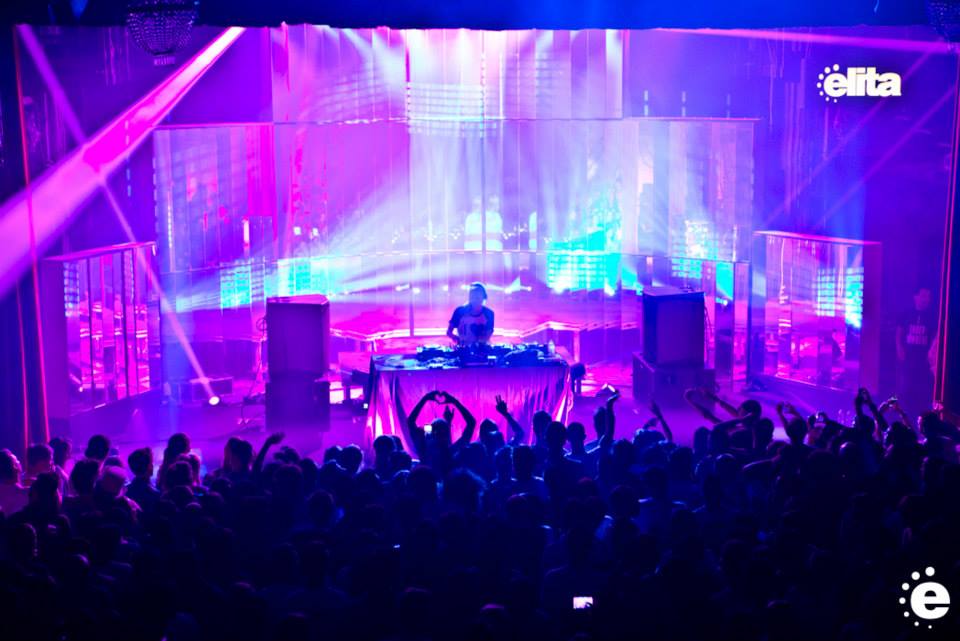
I had a great chance to test the Claypaky Sharpy and the Robe Pointe side by side at Elita Ouverture, held at Teatro Franco Parenti in Milan from 19 to 22 September 2013.
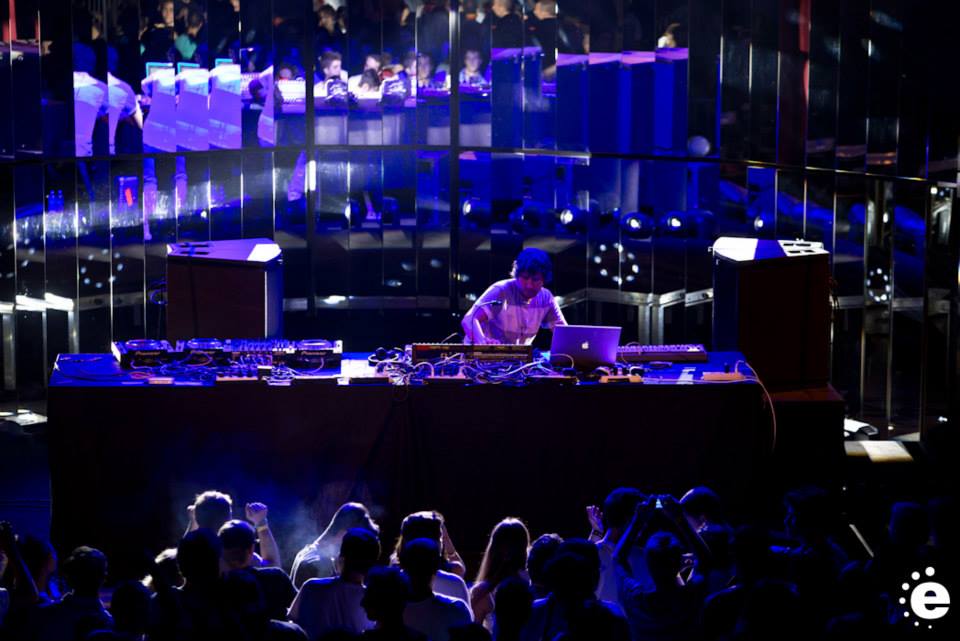
The line-up included Anna Calvi and De La Soul, plus DJ sets by Ellen Allien, Mathew Jonson, Prins Thomas and Tim Sweeney.
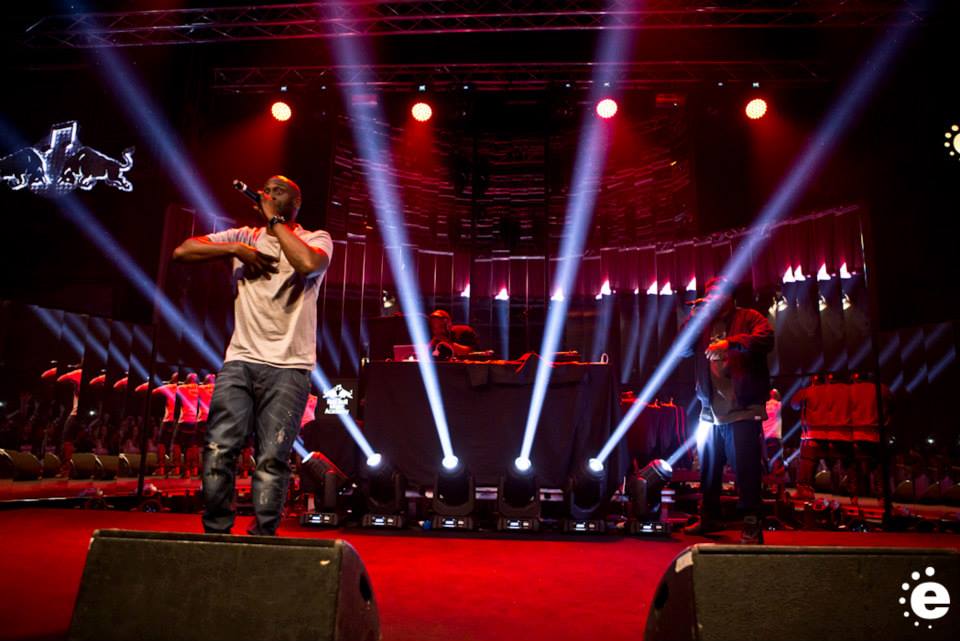
The stage and the rig
The set was a semicircular wall of mirrors designed by Marco Klefisch: three levels made of 11 modules of 8 mirrors each, all adjustable horizontally, plus 3 central modules of 4 mirrors.
I worked on a lighting design by Stefano Limone and Gianfranco Saponaro, with this rig:
- 12 Claypaky Sharpy
- 12 Robe Pointe
- 8 Robe Robin 600 LED Wash
- 2 Martin MAC 301 Wash
- 6 Vari-Lite PC 1200
- 6 four-lamp blinders
- 2 ETC zoom profiles
- Lighting console: Avolites Pearl Expert
Compared with the original plot, I moved all the floor fixtures to the backlight: the 6 central Pointes, 8 Sharpys either side of the DJ booth (4 + 4), and only the 2 MAC 301s left on the front corners of the stage.
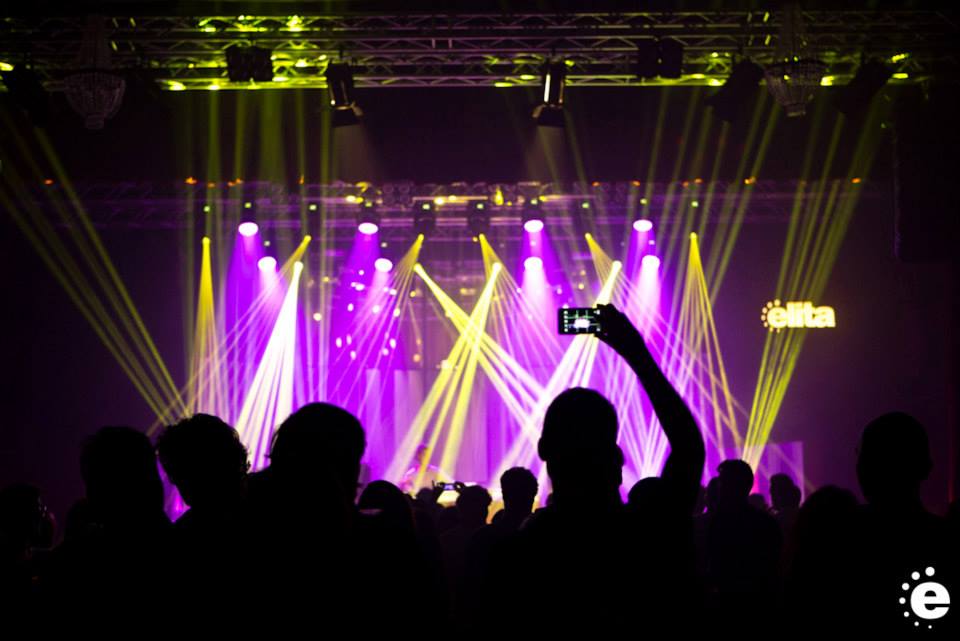
Sharpy and Pointe compared
The two big new arrivals at the festival were the Sharpy and the Pointe. The first thing to keep in mind is that they are two different moving heads. The Sharpy is the pioneer of the mini beam, built to throw narrow, powerful beams. The Pointe was born as a spot that can behave like a beam, and it does that convincingly.
Movement
Both are very fast, with excellent response and precision.
Gobos
The Pointe’s gobos are far more fun and versatile, which makes sense for a fixture born as a spot. The square mesh gobo, with full zoom and the prism in, fills the space with very little loss of output. With the Sharpy I stuck to what it does best: circle gobos of different sizes and the line gobo. With the prism in they also kept good brightness.
Prism
The Pointe also has a 6-facet linear prism, which is very useful and looks great when rotating. The Sharpy only has the 8-facet prism.
Colours
Excellent, with good rendering on both heads. The CTO filters are well made too.
Power consumption
The Sharpy wins clearly. It delivers huge output from a lamp of just 189 W and a total draw of 350 VA, mostly thanks to its very efficient optics.
Specifications side by side
Here are the two data sheets compared, with the Pointe in beam mode:
- Power consumption: Sharpy 350 VA at 230 V 50 Hz; Pointe 470 W at 230 V 50 Hz.
- Lamp: Sharpy short-arc discharge in a reflector; Pointe short-arc discharge with integrated reflector.
- Lamp power: Sharpy 189 W; Pointe 280 W.
- Illuminance at 20 m: Sharpy 59,760 lux (3.8° zoom); Pointe 82,400 lux (2.5° zoom).
- Beam diameter at 20 m: Sharpy 1.46 m (3.8° zoom); Pointe 0.9 m (2.5° zoom).
- Average lamp life: Sharpy 2,000 h; Pointe 2,000 h.
- Zoom: Sharpy 0° to 3.8°; Pointe 2.5° to 10°.
- Colours: Sharpy wheel with 14 colours + open; Pointe wheel with 13 colours + open.
- Gobos: Sharpy wheel with 17 fixed gobos; Pointe wheel with 10 fixed gobos + 4 beam reducers, wheel with 9 rotating gobos.
- Prism: Sharpy rotating 8-facet circular; Pointe rotating 8-facet circular and rotating 6-facet linear.
- Frost: Sharpy yes; Pointe yes.
- Pan and tilt: Sharpy 540° / 250°; Pointe 450° / 270°.
- Pan/tilt speed: Sharpy 2.45 s / 1.30 s; Pointe not stated, but very fast.
- DMX modes: Sharpy 2; Pointe 3.
- Max channels: Sharpy 20 (vector mode); Pointe 30 (mode 3).
- Weight: Sharpy 19 kg; Pointe 15 kg.
- Minimum distance from lit objects: Sharpy 12 m; Pointe 10 m.
Conclusions
Keep in mind the points above and the different nature of the two fixtures. At first many people, me included, made the big mistake of calling the Pointe a copy of the Sharpy.
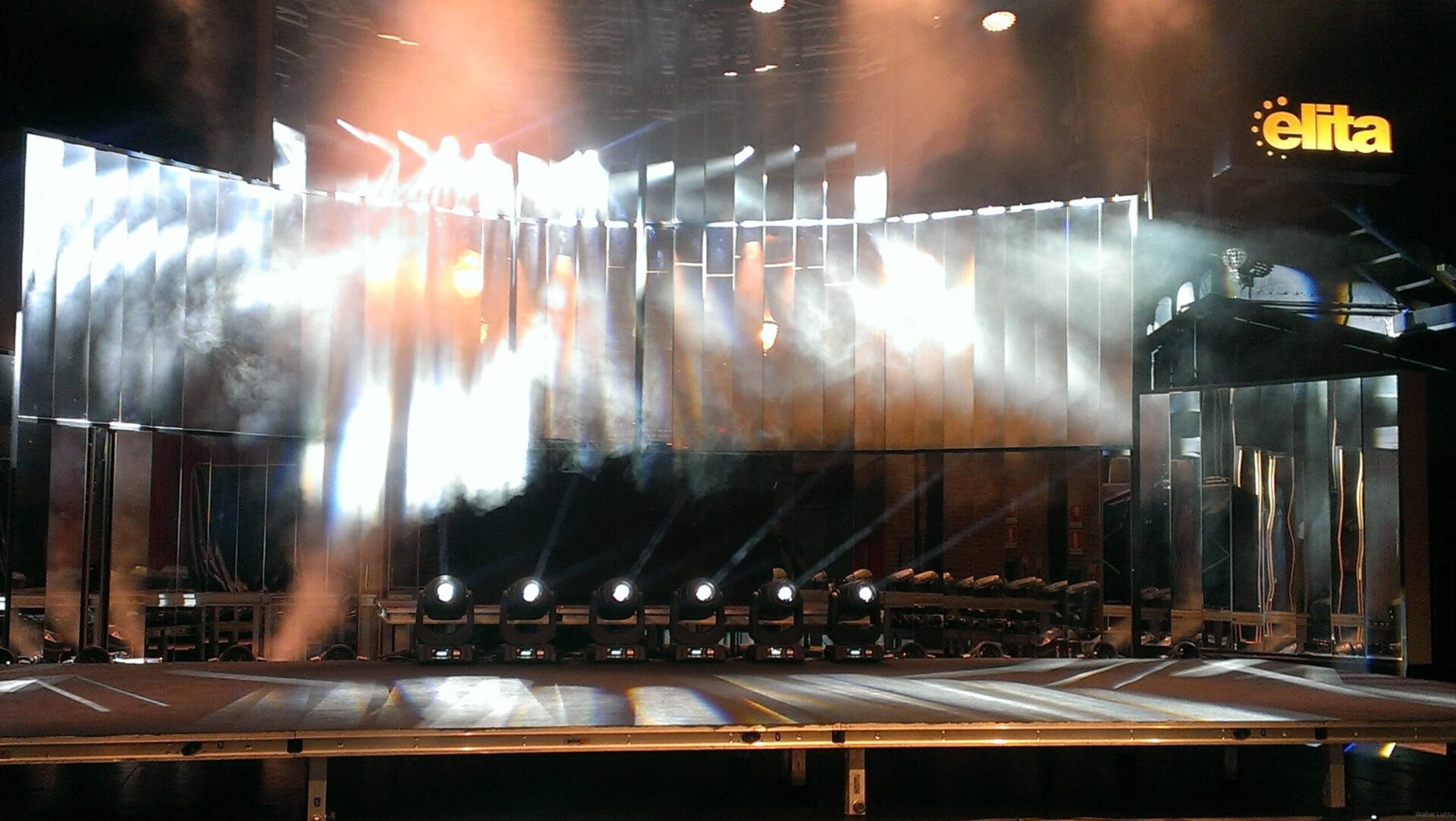
That said, in the show where I tested them, the Pointe and the Sharpy seemed to complement each other perfectly. At times the Sharpys shot like lightning through the Pointes’ filling gobos, creating a very special effect. At other times they behaved like twins, and then seemed to transform on the fly as different effects kicked in.
Credit to Claypaky for being the first to bring this kind of technology to market, and compliments to Robe for answering without trying to imitate it.
One last point, and a very important one for both: the weight. One person can hang and strike the body alone, much to the delight of crew who don’t miss the days when it took at least two people to rig or pack a moving head.